

How Does Volvo EX30 Charging Work for Denver, CO Drivers?
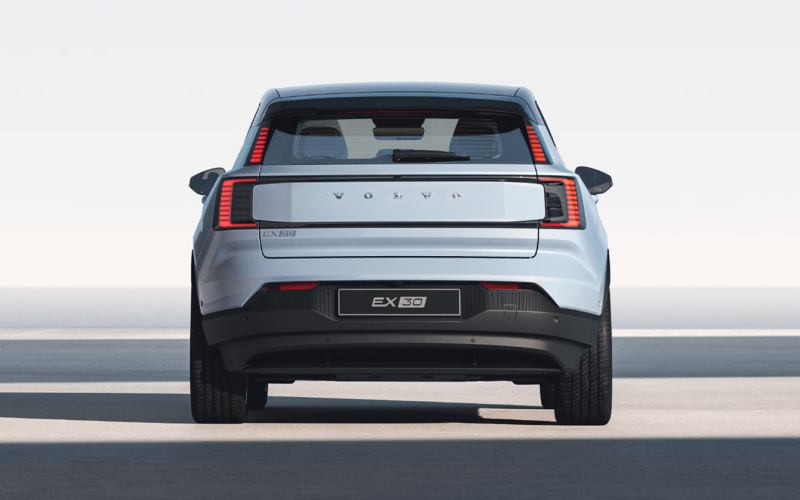
Rickenbaugh Volvo Cars – How Does Volvo EX30 Charging Work for Denver, CO Drivers?
Charging the 2026 Volvo EX30 can feel refreshingly simple once you understand how the vehicle supports daily routines, public fast charging, and longer trips around the Denver area. For many shoppers considering a small fully electric SUV, the biggest questions are not only about range, but also about where to charge, how long it takes, and how the vehicle helps plan charging stops. The EX30 answers those questions with a 69.0 kWh battery, EPA-estimated range up to 261 miles in Single Motor Extended Range models, and useful navigation and charging tools built into the vehicle.
The EX30 is fully electric, so it does not use gasoline or a plug-in hybrid system. That means the ownership experience is built around charging at home, at work, or at public charging stations. For Denver, CO drivers who commute on I-25, cross town on Speer Boulevard, travel between downtown and the foothills, or run errands through compact urban streets, the EX30’s combination of manageable size and electric efficiency can be a strong fit. The key is building a charging routine that matches your life rather than thinking of charging exactly like stopping for fuel.
What Charging Options Does the 2026 Volvo EX30 Offer?
The 2026 Volvo EX30 supports both everyday charging and DC fast charging. Many EV owners prefer to charge at home overnight when possible, because that routine can make the vehicle feel ready each morning without requiring a special stop. Volvo also notes that a ChargePoint home wallbox can provide convenient overnight charging. For drivers who do not charge at home every night, public charging locations can be found through the Volvo EX30 app or through Google Maps in areas where charging stations are listed.
For faster charging on the road, the EX30 can charge from 10-80 % in about 26.5 minutes at a 153kW DC fast-charging station under typical conditions. Charging time is not guaranteed because factors such as outdoor temperature, battery temperature, charging equipment, battery condition, and vehicle condition can affect speed. Still, that 10-80 % benchmark is an important number because many EV road trips are planned around fast, efficient partial charging stops rather than waiting for a full 100 % charge every time.
How Range Fits Denver-Area Driving
The Single Motor Extended Range version of the EX30 offers EPA-estimated range up to 261 miles. Twin Motor Performance models offer EPA-estimated range up to 253 miles, while Cross Country Twin Motor Performance models offer EPA-estimated range up to 227 miles. These figures represent a fully charged battery under ideal driving conditions, and actual range can vary for many reasons, including driving conditions, driving style, maintenance, battery condition, equipment, and other factors.
For shoppers around Denver, that range can cover many ordinary weekly driving patterns with room to spare. A driver commuting from surrounding communities, making school drop-offs, meeting clients, heading to a gym, or visiting restaurants and entertainment districts may find that charging a few times per week is enough, depending on mileage and access to charging. The EX30 also includes one-pedal drive, which can make city driving smoother by allowing the vehicle to speed up or slow down using the accelerator. When the driver lifts off, the vehicle can brake to a standstill, supporting efficiency and a calmer driving feel in traffic.
How the EX30 Helps You Plan Charging Stops
The EX30 is designed to reduce the guesswork that sometimes makes new EV shoppers hesitate. When the battery drops to 20 %, the vehicle can provide charging reminders. The center display can show nearby charging stations on Google Maps, along with navigation and estimated charge levels on arrival. This matters because good EV planning is often about knowing not just where a charger is, but whether the vehicle has enough charge to arrive comfortably.
Battery pre-conditioning is another important advantage. When a charging station is selected as the destination, the EX30 can heat or cool the battery before arrival. That helps the battery reach a more favorable temperature for charging, which can reduce waiting time at the station. In practical terms, the vehicle is not just pointing you toward a charger; it is also preparing itself to use that charger more effectively.
Why NACS Compatibility Matters
The EX30 also supports expanded charging access through NACS compatibility. Volvo states that EX30 drivers can access an additional 23,000+ DC fast chargers across North America with an included NACS Fast Charging Adapter. For Denver-area drivers, this added flexibility can make electric travel feel more practical, whether the trip is across the metro area or beyond Colorado’s Front Range.
Charging network access is a major part of EV confidence. Even if most charging happens at home, public charging flexibility helps when routines change. A longer workday, a spontaneous dinner, a drive to visit family, or an unexpected detour is easier to manage when the vehicle can help locate stations and access a wider network of DC fast chargers.
Daily Charging Habits to Consider
Volvo suggests charging to 90 percent for daily driving as a standard recommendation for the best battery life. That does not mean the vehicle cannot be charged to 100 % when needed. For example, drivers can use the center display controls to reach 100 % if a full charge is needed to reach a destination or the next charging station. The point is to treat 90 percent as a practical daily target and reserve full charging for specific travel needs.
When thinking about how the EX30 would fit your routine, it helps to review a few personal details before you test drive. These questions make it easier to decide whether home charging, public charging, or a mix of both will work best.
- Weekly mileage: Estimate how many miles you typically drive for commuting, errands, school, and weekend plans.
- Home charging access: Consider whether you can install or use a home charging solution where you park most often.
- Workplace charging: Check whether your workplace, parking garage, or nearby area offers convenient charging access.
- Public station locations: Use Google Maps or charging apps to identify stations near your common routes and destinations.
- Travel frequency: Think about how often you take longer drives that may require DC fast charging along the way.
Once you understand these details, the EX30’s charging experience becomes easier to picture. Many drivers discover that daily EV ownership is less about emergency charging and more about topping up naturally during normal downtime.
How to Evaluate Charging During a Test Drive
A test drive is a great opportunity to ask detailed charging questions. Beyond feeling the acceleration and testing one-pedal driving, take time to explore the center display, charging settings, and navigation features. The EX30’s technology is designed to make charging part of the vehicle experience, so it is worth seeing how those tools work before making a decision.
- Open Google Maps: Ask to view charging stations and route planning features on the center display.
- Review battery information: Look at how the vehicle displays current charge, estimated range, and charging guidance.
- Ask about NACS use: Discuss how the included NACS Fast Charging Adapter expands DC fast charging access.
- Discuss home charging: Review charging equipment options and how overnight charging could fit your schedule.
- Test one pedal drive: See how the feature changes stop-and-go driving and low-speed control.
These steps help turn EV research into practical understanding. Rather than focusing only on numbers, you can evaluate how the EX30 supports the way you actually drive.
Frequently Asked Questions:
How long does it take to charge the 2026 Volvo EX30?
The EX30 can typically charge from 10-80 % in about 26.5 minutes at a 153kW DC fast-charging station. Charging times vary based on factors such as outdoor temperature, battery temperature, charging equipment, battery condition, and vehicle condition.
Should I charge the Volvo EX30 to 100 % every day?
Volvo suggests charging to 90 percent for daily driving as a standard recommendation for the best battery life. You can use the center display controls to charge to 100 % when you need a full charge for a longer route or to reach the next charging station.
Can the Volvo EX30 help find public chargers?
Yes. The center display can show nearby charging stations on Google Maps, and the system can provide navigation and estimated charge levels on arrival. The EX30 can also provide reminders when the battery drops to 20 %.
Does the EX30 work with NACS fast chargers?
Yes. EX30 drivers can access an additional 23,000+ DC fast chargers across North America with an included NACS Fast Charging Adapter, giving the vehicle more flexibility for public fast charging.
The 2026 Volvo EX30 makes charging feel like a natural part of ownership. With strong EPA-estimated range, fast DC charging capability, Google built-in planning tools, battery pre-conditioning, one-pedal drive, and NACS compatibility, it gives Denver, CO shoppers the confidence to consider a fully electric Volvo as a daily vehicle. The best next step is to compare your real driving habits with the EX30’s range and charging tools, then test the vehicle in person to see how naturally it fits your routine.
0 comment(s) so far on How Does Volvo EX30 Charging Work for Denver, CO Drivers?